

C3HQ / PEOPLE & OPERATIONS
In development · Access by enquiry
Manage people.
And the work around them.
C3 brings people’s records, agreements, operational plans and day-to-day tasks into one workspace, with requests and decisions connected to the records they change.
Follow one working exampleA WORKING EXAMPLE
One passport. A whole team’s plans.
Follow Amir’s record through the work and the request.
Fictional people and event · Actual local product preview
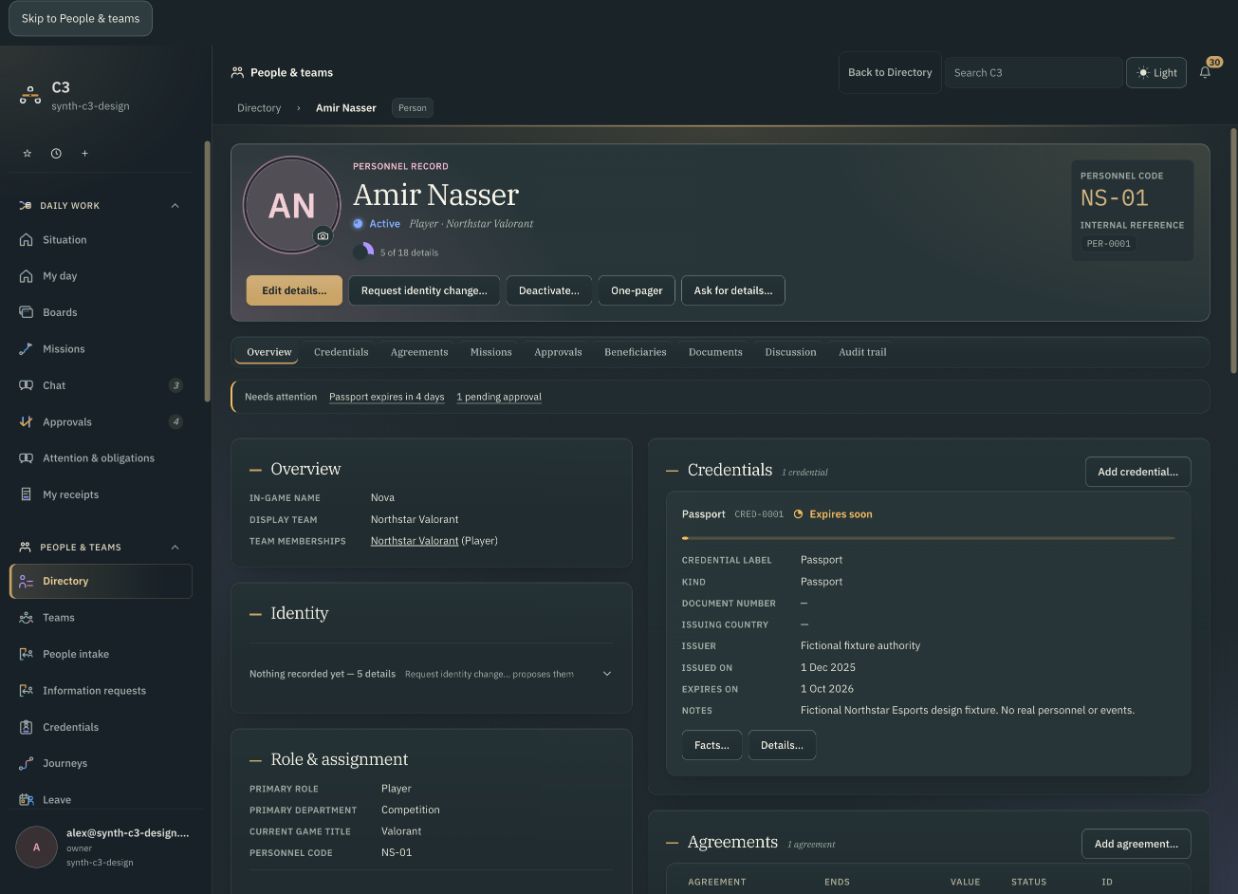
Amir NasserNorthstar Valorant · Player
People / Amir Nasser / Credentials
The passport expires before the trip.
Amir is on the Riyadh Invitational roster. His person record holds the passport’s expiry date alongside his agreements and mission assignments.
A coordinator checks the record against the event dates.
- Passport expires
- 1 October 2026
- Event begins
- 3 October 2026
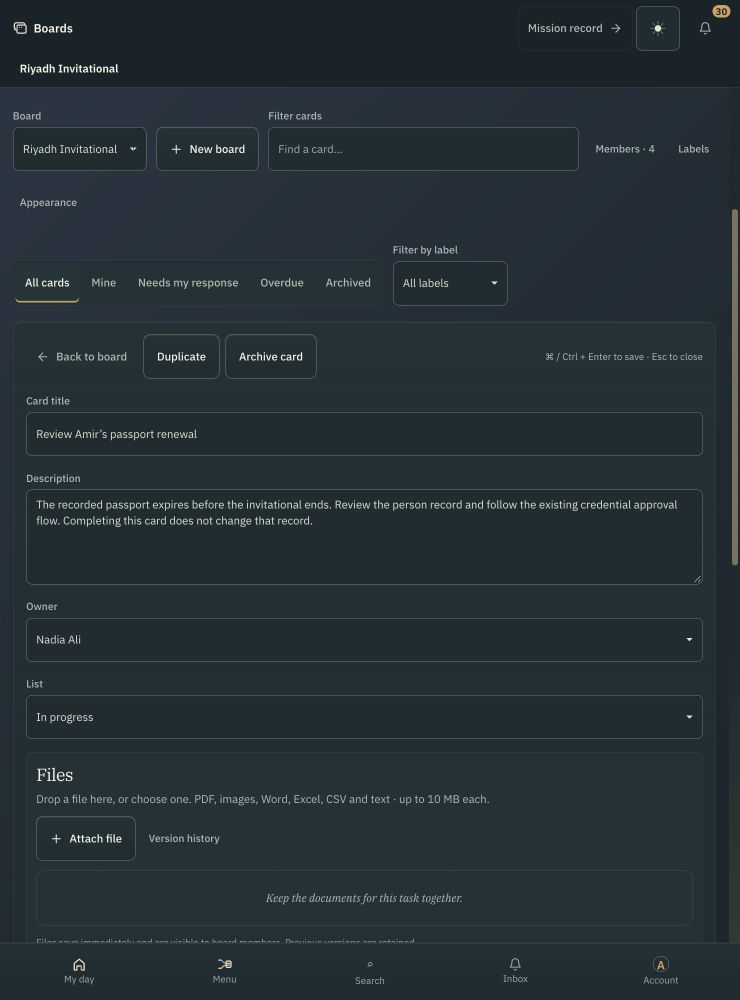
Boards / Riyadh Invitational / Passport renewal
Nadia has a task to move forward.
The coordinator created a passport renewal task on the event board and assigned it to Nadia. The task also appears in My day for the person whose response it needs.
Nadia follows up on the renewal. The board records who owns the work and its progress.
- Task owner
- Nadia Ali
- Board status
- In progress
Approvals / APR-0023 / Credential CRED-0001
The renewal is submitted for review.
Sam has submitted new passport dates for the same credential. The reviewer can see what is proposed and where the request stands. Completing the board task does not update the passport record.
The next human action is to begin review. No decision or execution is recorded yet.
- Proposed new expiry
- 26 September 2031
- Request status
- Review required
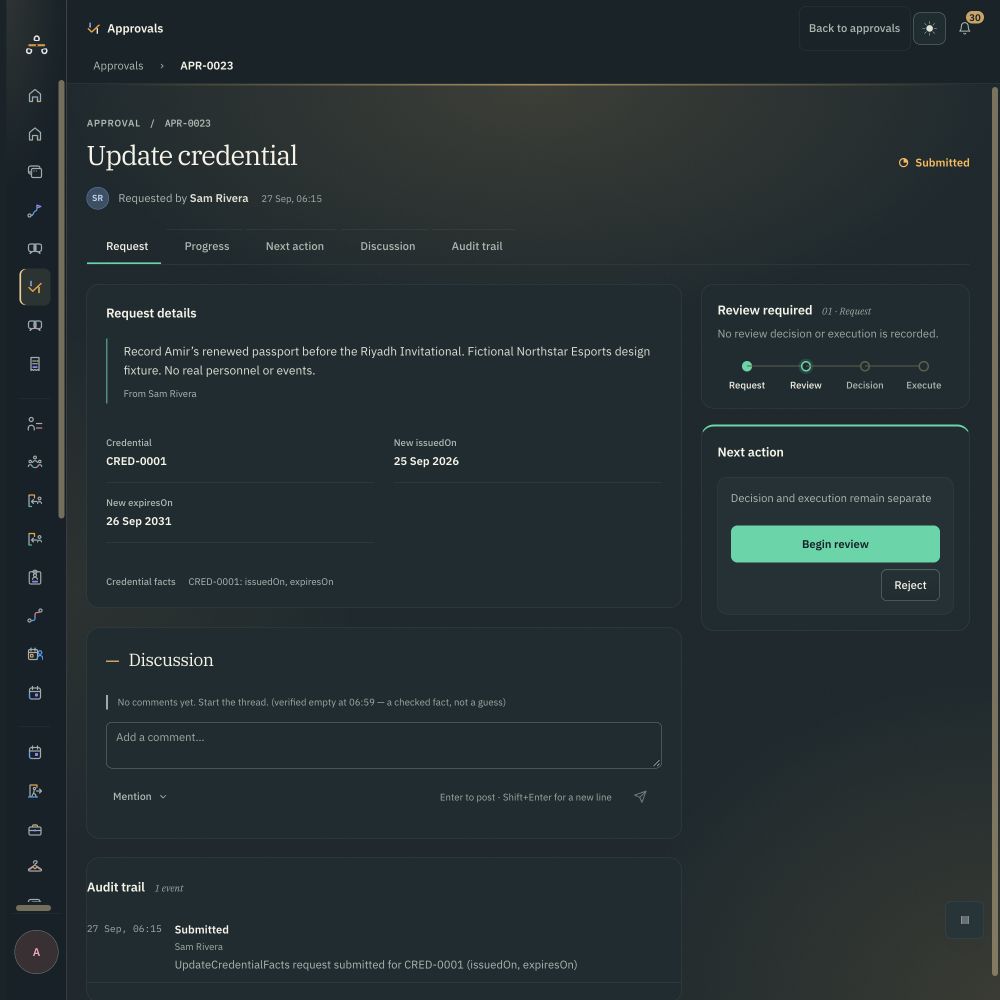
Same person. Same credential. Different responsibilities. C3 keeps the records, assigned work and review request available in their working context.
A mission is a named operation, such as an event or team trip, with its own people and dates.
BEYOND THIS EXAMPLE
The everyday work
of looking after a team.
For operations managers, team coordinators and the people handling the records behind their work.
- People & teams
- Keep a person’s credentials, agreements and assignments connected to their record.
- Daily work & boards
- Assign tasks, follow progress and keep discussion with the work.
- Missions
- Bring the people, dates and records of an operation together.
- Requests & decisions
- Review proposed changes with their context and recorded progress.
START WITH YOUR TEAM
Show us the work
you need to bring together.
C3 is in active development. Tell us how you manage people and operations today, and we can discuss fit and access.
Talk to the C3 team